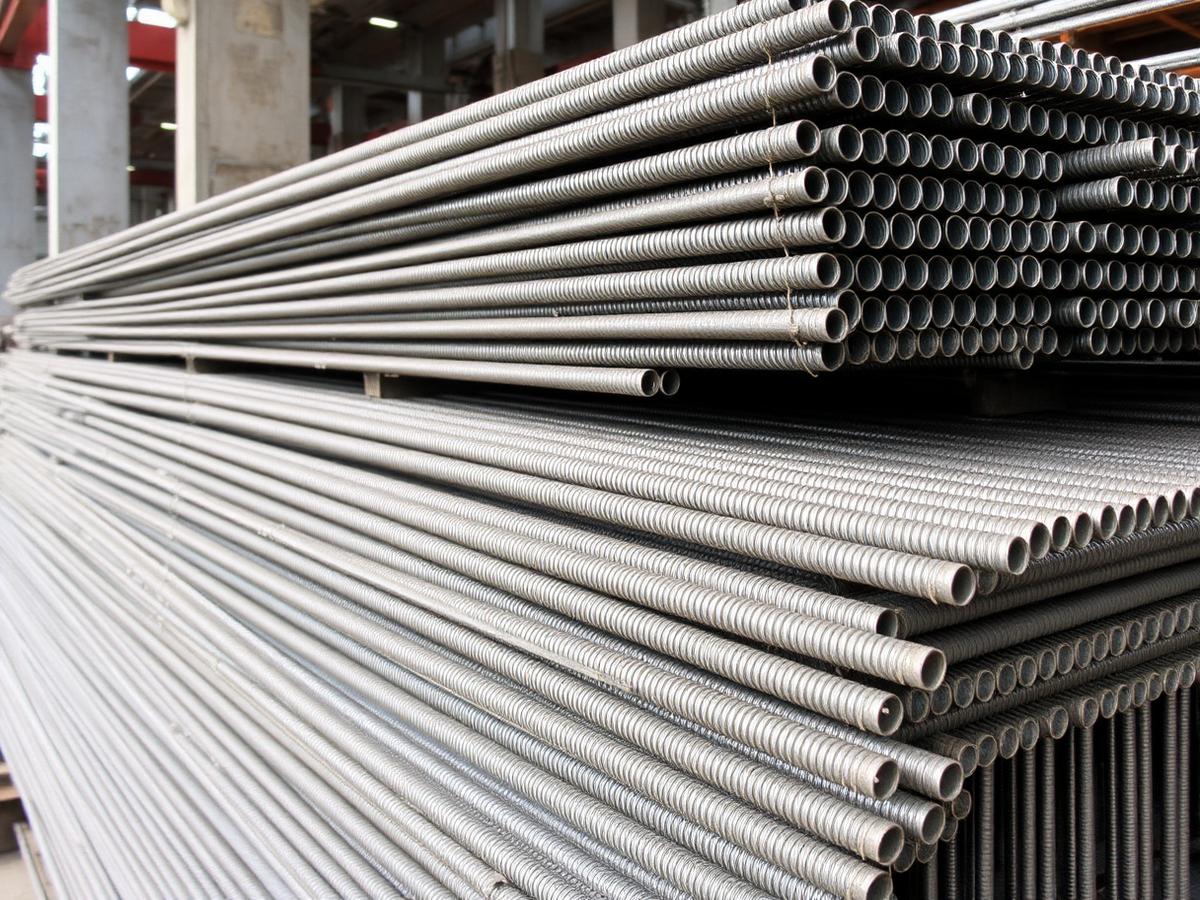
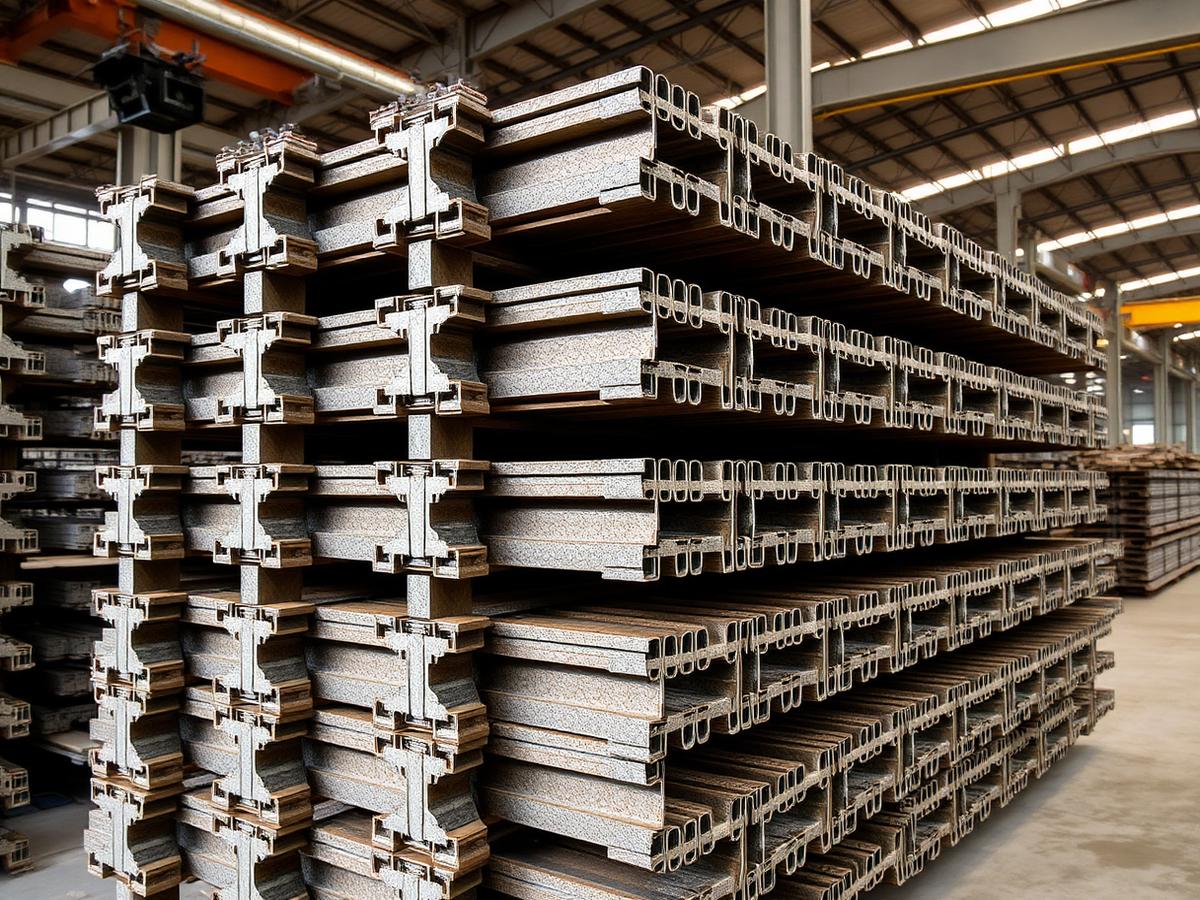
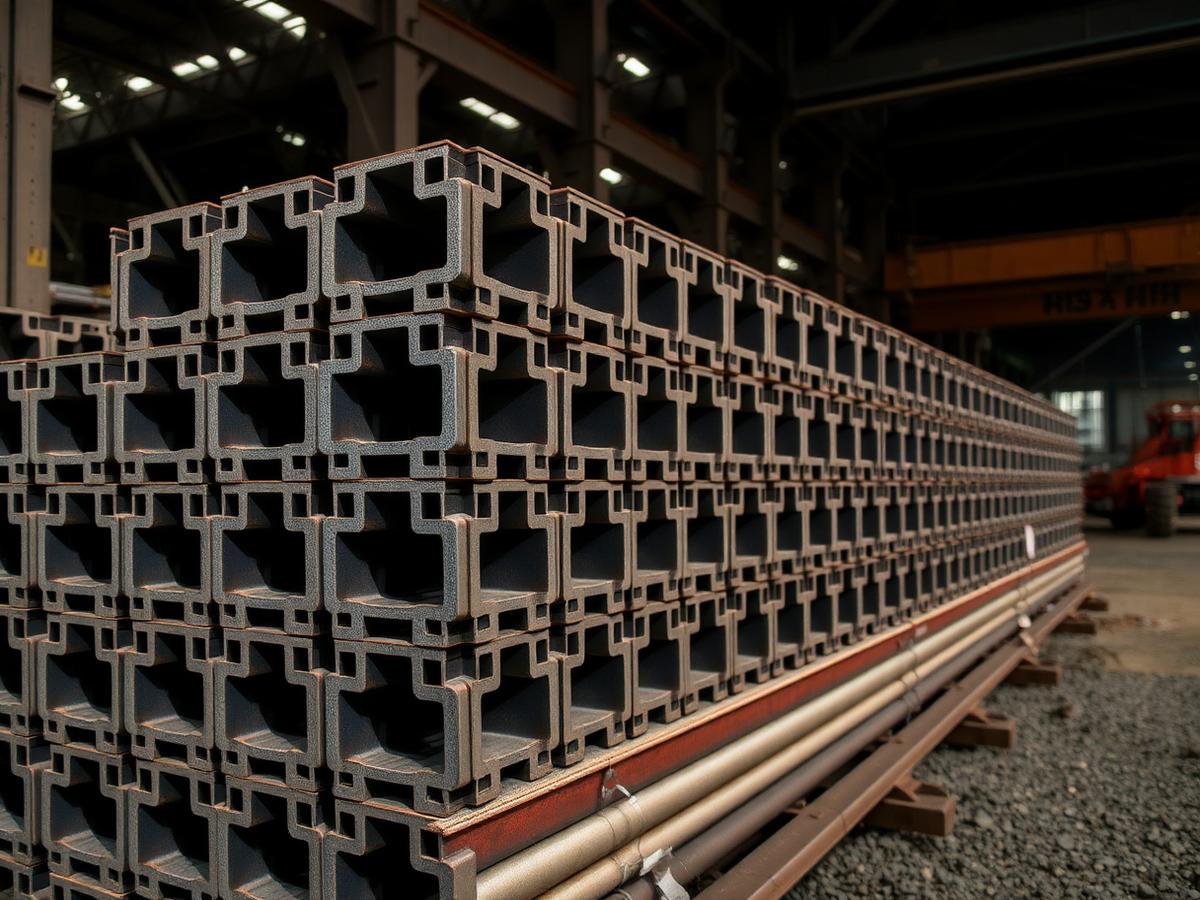
Hollow Sections: How SHS, RHS and CHS Are Manufactured
The HFW / ERW process and cold-forming sequence that turn flat steel strip into square, rectangular and circular hollow structural sections.
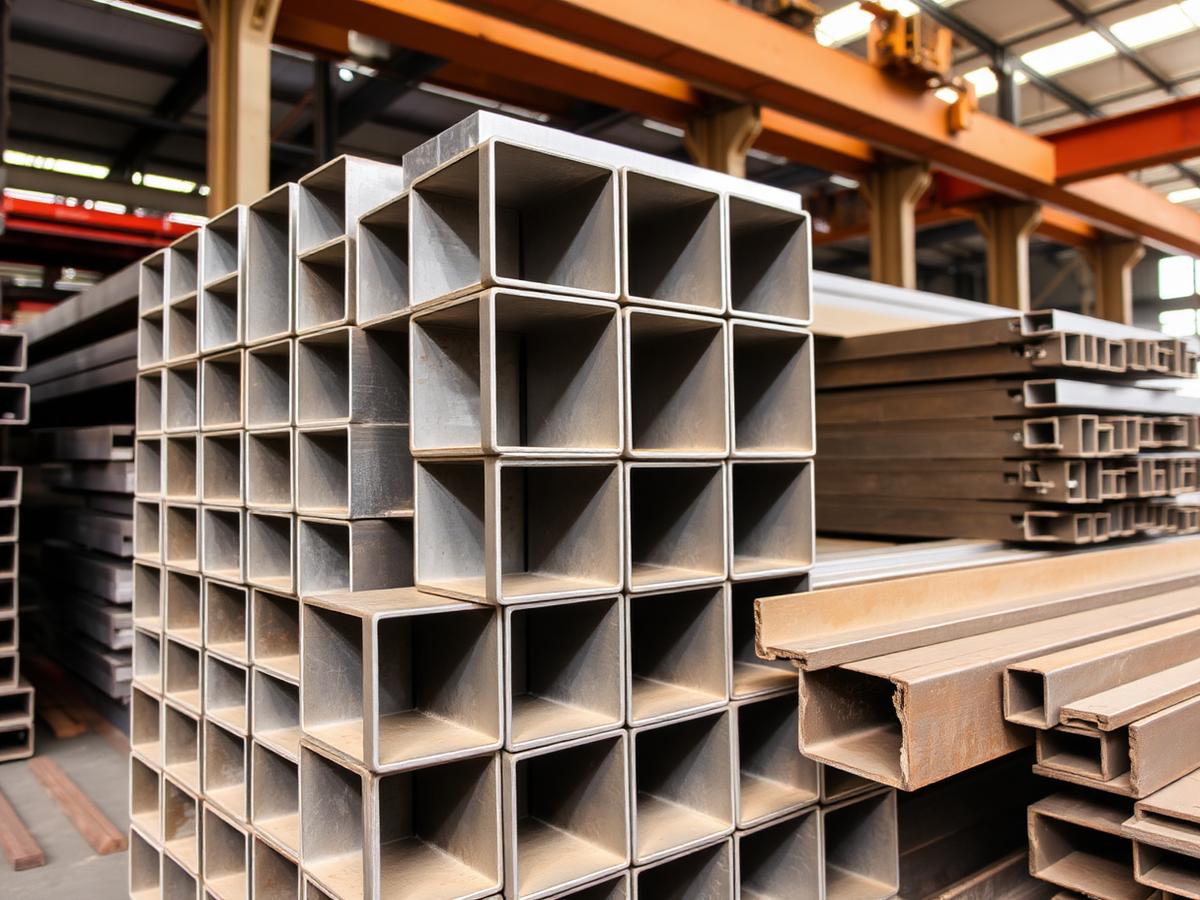
Structural Hollow Sections (SHS, RHS, CHS) start life as HR coil. The coil is slit to width, cold-formed into a tube and longitudinally welded, then either left circular (CHS) or further shaped into square (SHS) or rectangular (RHS) profiles.
1. Coil Slitting
An HR master coil is slit longitudinally into multiple narrower strips. Strip width is calculated precisely — it determines the final perimeter of the finished section.
2. Forming Mill
The strip passes through a series of forming rolls that gradually curl the flat strip into a near-circular open tube, with the strip edges meeting at the top.
3. High-Frequency Welding (HFW / ERW)
The two strip edges are pressed together while a high-frequency current (typically 200–400 kHz) heats only the very edges to forging temperature. Squeeze rolls forge the edges into a solid weld with no filler metal. External and internal weld beads are then scarfed off.
4. Sizing — CHS, SHS, RHS
For CHS the welded tube passes through sizing rolls that bring it to final OD. For SHS/RHS, the round tube is then fed through a turks-head shaping mill that cold-forms it into the target square or rectangular cross-section with sharp corner radii.
5. Cutting, Testing & Packing
Lengths are flying-cut to 6 m or 12 m. Sections are tested by eddy current or ultrasonic to verify weld integrity per EN 10219 or ASTM A500, then bundled, end-capped if required, and stencilled for traceability.
Hollow Sections
Square, rectangular & circular hollow structural sections.