Pipes & Tubes: ERW, LSAW and Seamless Manufacturing
The three principal routes by which carbon steel pipes are produced — and where each is specified across oil & gas, MEP and structural applications.
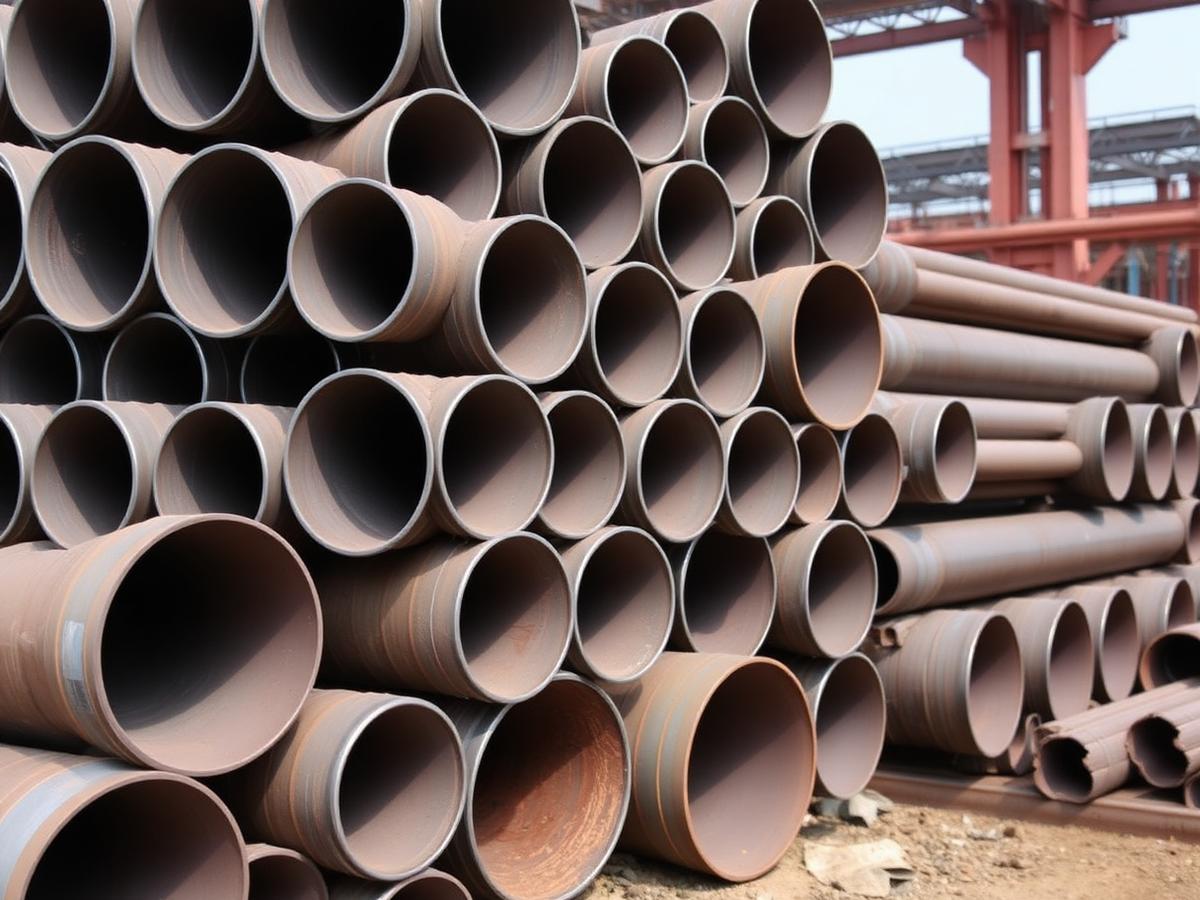
Carbon steel pipes are produced by three distinct processes: Electric Resistance Welded (ERW), Longitudinally Submerged-Arc Welded (LSAW), and Seamless. Each has its own size range, cost point and application sweet spot.
ERW — Electric Resistance Welded
Cold-formed from HR coil and high-frequency welded along the longitudinal seam — the same fundamental process as hollow sections. Cost-effective for diameters up to ~24". Widely used for line pipe, fire-fighting, MEP services and structural piling. Standards: API 5L, ASTM A53, A135.
LSAW — Longitudinally Submerged-Arc Welded
Heavy plate is U-formed then O-formed (the 'UOE' process) into a tube, and the longitudinal seam is welded inside and out using submerged-arc welding — a high-deposition, deeply penetrating weld ideal for large diameter, thick-wall pipe. The preferred route for high-pressure transmission line pipe in 16" and above.
Seamless — Mannesmann Piercing
A solid round billet is heated to ~1200 °C and pushed between two skewed barrel-shaped rolls. A piercing plug in the centre forces a hole through the rotating billet — no weld required. The hollow shell is then elongated on a mandrel mill, sized, and heat-treated. Seamless pipe is specified where no weld is acceptable: high-pressure boiler service, refinery process piping, deep oil & gas wells. Standards: ASTM A106, A335, API 5CT.
Finishing Operations
All three pipe types share common finishing: hydrostatic pressure testing, NDT (UT, RT or EC), end facing or bevelling, plain-end / threaded / coupled options, coating (FBE, 3LPE) when specified, and bundle/loose packing for shipping.
Pipes & Tubes
ERW, seamless and welded pipes for industrial applications.