Heavy Plate Mills: How Structural Steel Plates Are Rolled
Reversing 4-high plate mills, TMCP processing and the heat treatments that produce plates up to 200 mm thick.
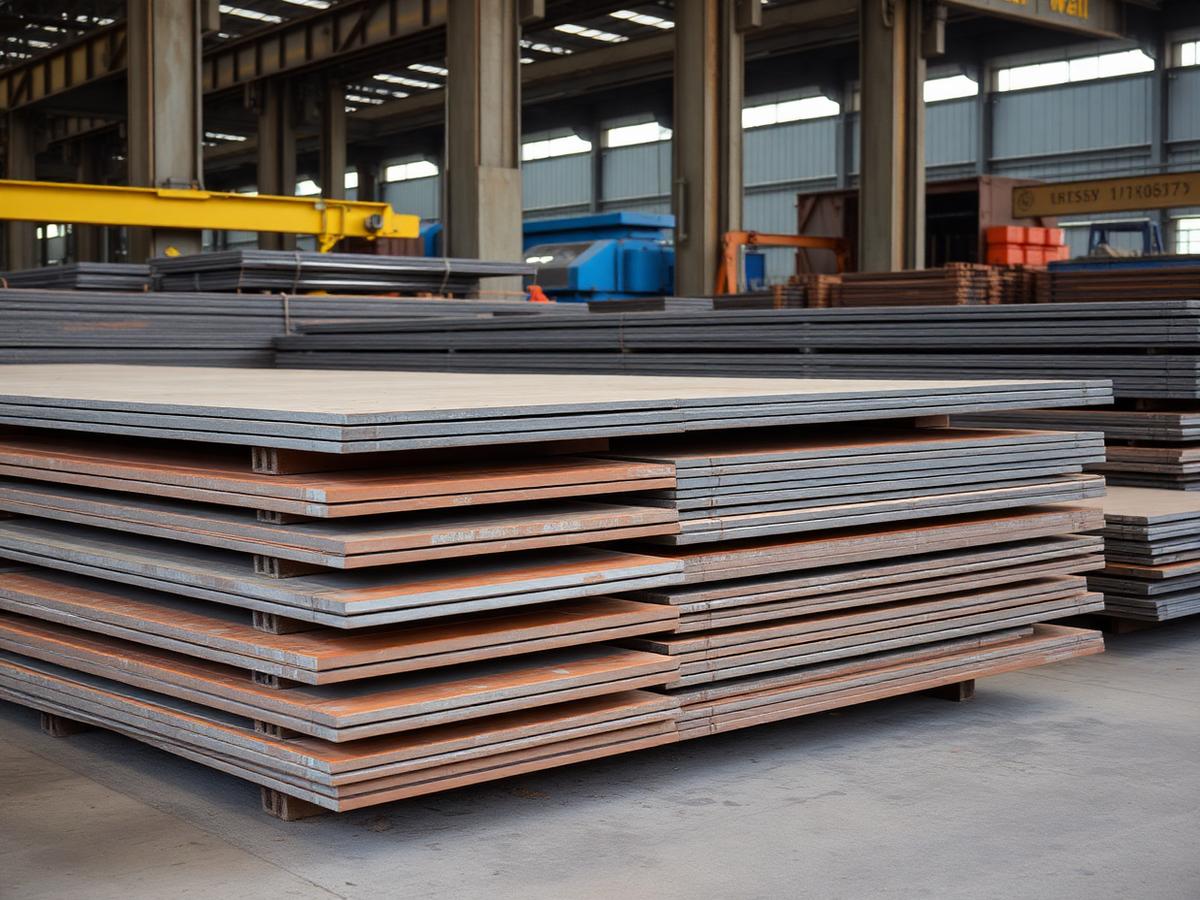
Unlike strip mills, heavy plates are produced on reversing plate mills designed to roll individual slabs back and forth — sometimes with 90° turning — until the target thickness, length and properties are achieved.
1. Slab Reheating
Plate slabs (typically 250–400 mm thick) are reheated to 1150–1250 °C in walking-beam furnaces. Soak time is tightly controlled — too long causes austenite grain growth that hurts toughness.
2. Reversing Plate Mill
The slab is rolled back and forth through a 4-high reversing stand. A 90° turn between passes (called 'broadsiding') develops the width before the final longitudinal passes bring the plate to final thickness.
3. TMCP — Thermo-Mechanically Controlled Processing
For higher-strength grades such as S355ML or DH36, the final passes are made at controlled lower temperatures, often followed by accelerated water cooling (ACC). This refines the grain structure and delivers high strength + excellent low-temperature toughness without alloying penalty.
4. Hot Levelling & Cutting
Hot plates pass through a heavy roller leveller, then are cooled on a walking-beam cooling bed. Side trimmers and dividing shears cut to the customer's specified width and length.
5. Heat Treatment (Optional)
Pressure vessel and offshore grades may require normalising, quench-and-temper, or stress-relief heat treatments in dedicated furnaces before final NDT (UT, MT) and shipping.
Steel Plates
Heavy gauge plates for structural and pressure applications.