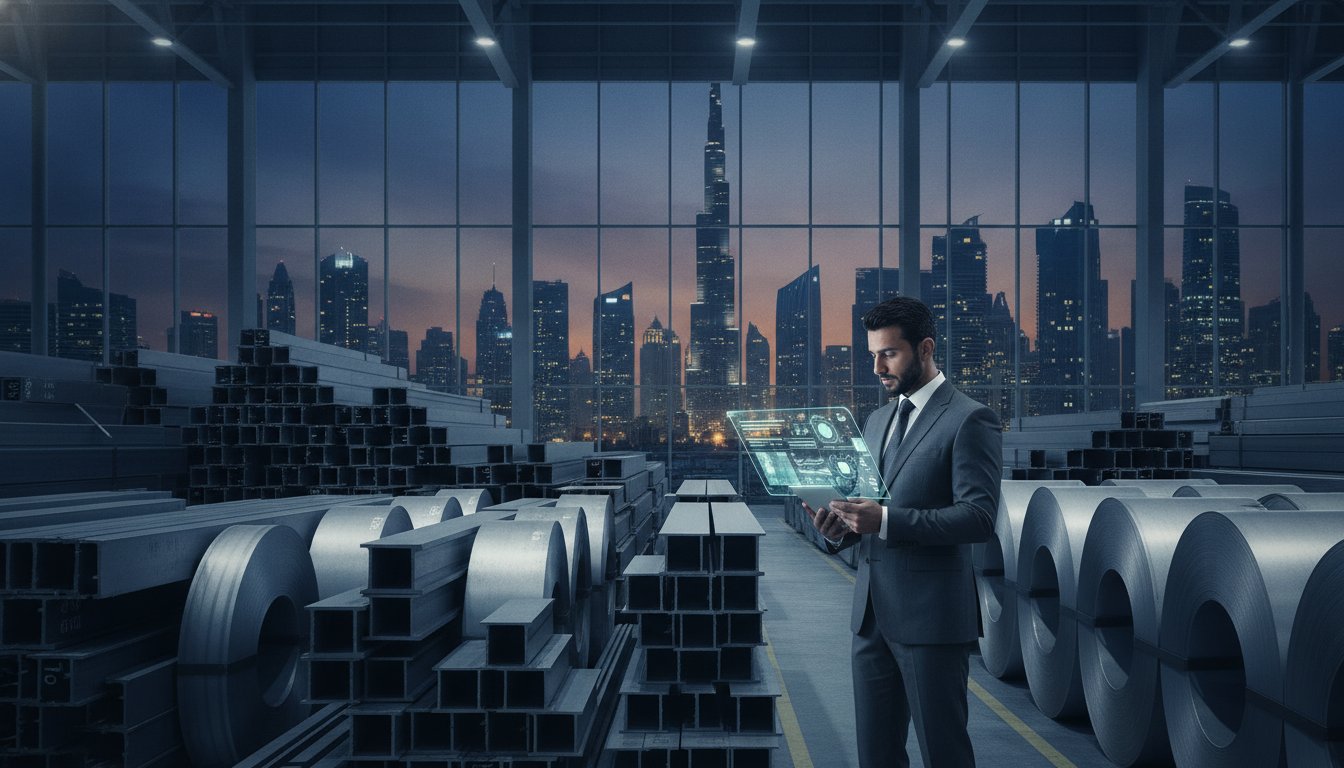
The Professional Guide to Galvanized Steel: Properties, Standards, and Procurement
Could a single decimal point in a mill test certificate be the difference between a thirty year lifecycle and a catastrophic structural failure in the UAE coastal heat? In the high salinity environments typical of regional infrastructure projects, the margin for error is non-existent. You likely recognize that selecting galvanized steel involves more than comparing quotes; it requires a deep understanding of metallurgical properties and rigorous compliance.
This professional guide offers a comprehensive technical and strategic overview of galvanized steel, bridging the gap between manufacturing theory and global procurement reality. We'll explore the critical differences between GI coils and other variants, ensuring you can specify the correct material for your environment. You'll learn to navigate the latest updates in ASTM A123/A123M-24 and ISO 1461:2022 standards to verify mill certifications with confidence. Finally, we provide a framework for identifying a reliable wholesale supplier, helping you balance initial procurement costs in AED with the long term durability your industrial projects demand.
Key Takeaways
- Understand the metallurgical mechanics of sacrificial protection and how it ensures structural integrity in high-salinity UAE environments.
- Identify the essential differences between ASTM A123/A123M-24 and ISO 1461:2022 standards to ensure global compliance for large-scale industrial projects.
- Evaluate the strategic cost-benefit ratio of galvanized steel versus stainless steel, balancing initial capital expenditure in AED with long-term maintenance requirements.
- Optimize your procurement process by learning to verify Mill Test Certificates and identifying Tier 1 mills across Europe, Asia, and the MENA region.
- Distinguish between Hot-Dip Galvanizing and electro-galvanizing to select the most durable coating method for marine and Oil & Gas infrastructure.
The Fundamental Principles of Galvanized Steel
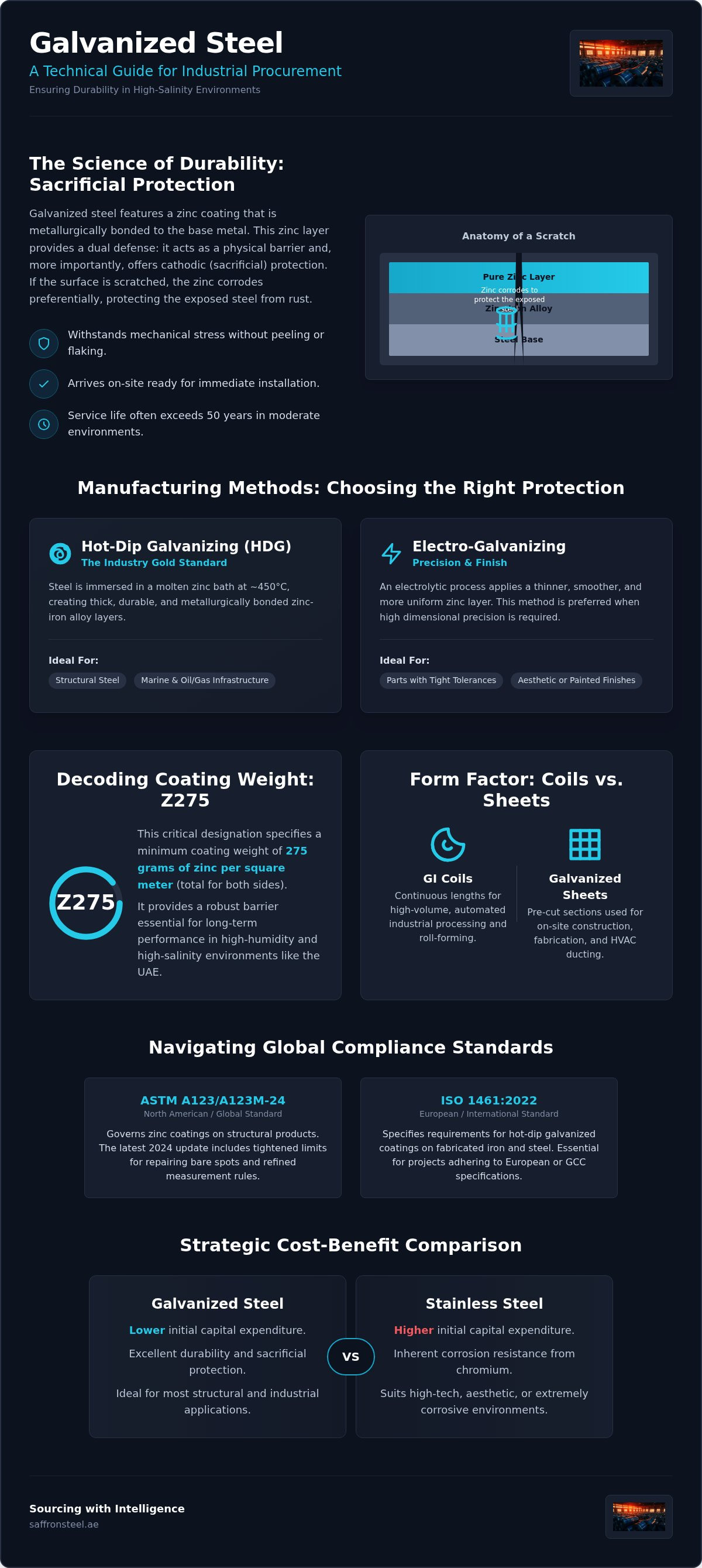
Galvanized steel is a carbon steel treated with a protective zinc coating through a specialized metallurgical process. Unlike standard paint or powder coatings that merely sit on the surface, the Galvanization process creates a series of zinc-iron alloy layers that are chemically bonded to the base metal. This fusion ensures that the coating doesn't peel or flake under mechanical stress. Zinc serves two primary roles. It acts as a physical barrier against moisture and oxygen while providing sacrificial protection. If the surface is scratched, the surrounding zinc corrodes preferentially to protect the exposed steel. This dual-action defense makes it the global standard for industrial infrastructure.
Industrial leaders prioritize this material for several reasons:
- Immediate installation: Materials arrive ready for use without the need for on-site painting or curing.
- Predictable performance: Coating thickness is measurable and standardized, ensuring consistency across bulk orders.
- Low maintenance: The sacrificial nature of the coating reduces the need for frequent inspections and touch-ups.
The Chemistry of Corrosion Resistance
Cathodic protection is the engine behind the longevity of galvanized steel. Zinc possesses a higher electronegativity than iron; therefore, it acts as an anode in the presence of an electrolyte like humidity or seawater. This is particularly vital in the UAE, where high atmospheric salinity accelerates oxidation. The coating consists of distinct layers, ranging from the hard zinc-iron alloy at the base to a pure zinc outer layer. These layers withstand decades of exposure. In moderate environments, a standard coating often lasts over 50 years, while even in aggressive coastal zones, it provides a significantly longer service life than untreated alternatives.
GI Coils vs. Galvanized Sheets
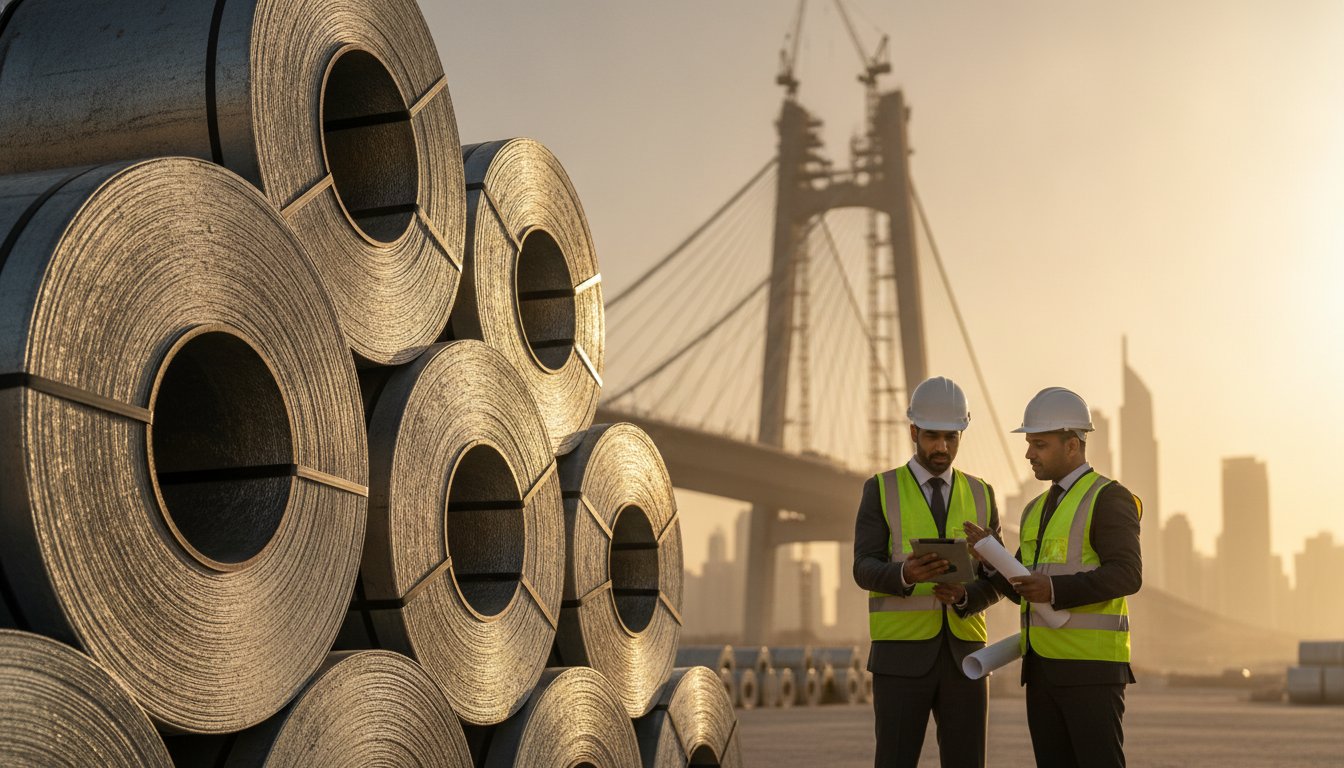
Procurement professionals often distinguish between GI Coils (Galvanized Iron Coils) and flat galvanized sheets based on the manufacturing scale and end-use. GI Coils are continuous lengths of steel wound for high-volume industrial processing. They are the preferred format for automated roll-forming and stamping operations. In contrast, galvanized sheets are pre-cut sections used primarily in onsite construction and HVAC ducting.
A key technical consideration is "spangle," the visible crystalline pattern on the surface. While "regular spangle" was once synonymous with quality, modern industrial projects often specify "minimized spangle" or "zero spangle." This provides a smoother surface finish. It's essential if the material requires subsequent painting or powder coating for aesthetic or additional protective reasons. Selecting the right surface finish is a strategic decision that impacts both the final appearance and the adhesion properties of secondary coatings.
Manufacturing Methods and Global Compliance Standards
The manufacturing process determines the protective capacity and surface quality of galvanized steel. Hot-Dip Galvanizing (HDG) remains the industry gold standard for structural steel. This method involves immersing prepared steel into a molten zinc bath at approximately 450°C, creating a series of zinc-iron alloy layers. For large scale industrial projects, continuous galvanizing lines are used to produce GI Coils efficiently. These lines pass steel strips through the zinc bath at high speeds, ensuring a uniform coating thickness across the entire coil. Electro-galvanizing offers an alternative for components requiring high dimensional precision. It uses an electrolytic process to apply a thinner, smoother zinc layer, which is ideal for parts that need to maintain tight tolerances.
Coating weight is the most critical metric for determining the Industrial Applications and Environmental Durability of Galvanized Steel. In the UAE, procurement professionals often specify a Z275 coating. This designation indicates a minimum of 275 grams of zinc per square meter, providing a robust barrier against the region's high humidity and salinity. Selecting an insufficient coating weight can lead to premature oxidation, significantly increasing long term maintenance costs for infrastructure projects.
Navigating International Steel Standards
Adherence to global standards is non-negotiable for industrial compliance. ASTM A123/A123M-24 is the latest standard as of July 2024, governing zinc coatings on structural products. It includes tightened limits for repairing bare spots and explicit rules for multi-specimen measurements. For projects following European or GCC specifications, ISO 1461:2022 is the primary reference. Published in August 2022, this standard mandates a fixed minimum repair coating thickness of 100 μm. Additionally, JIS G3302 is essential when sourcing GI coils from Asian mills, as it defines the specific coating grades and mechanical properties for zinc-coated steel sheets.
Quality Control and Inspection Protocols
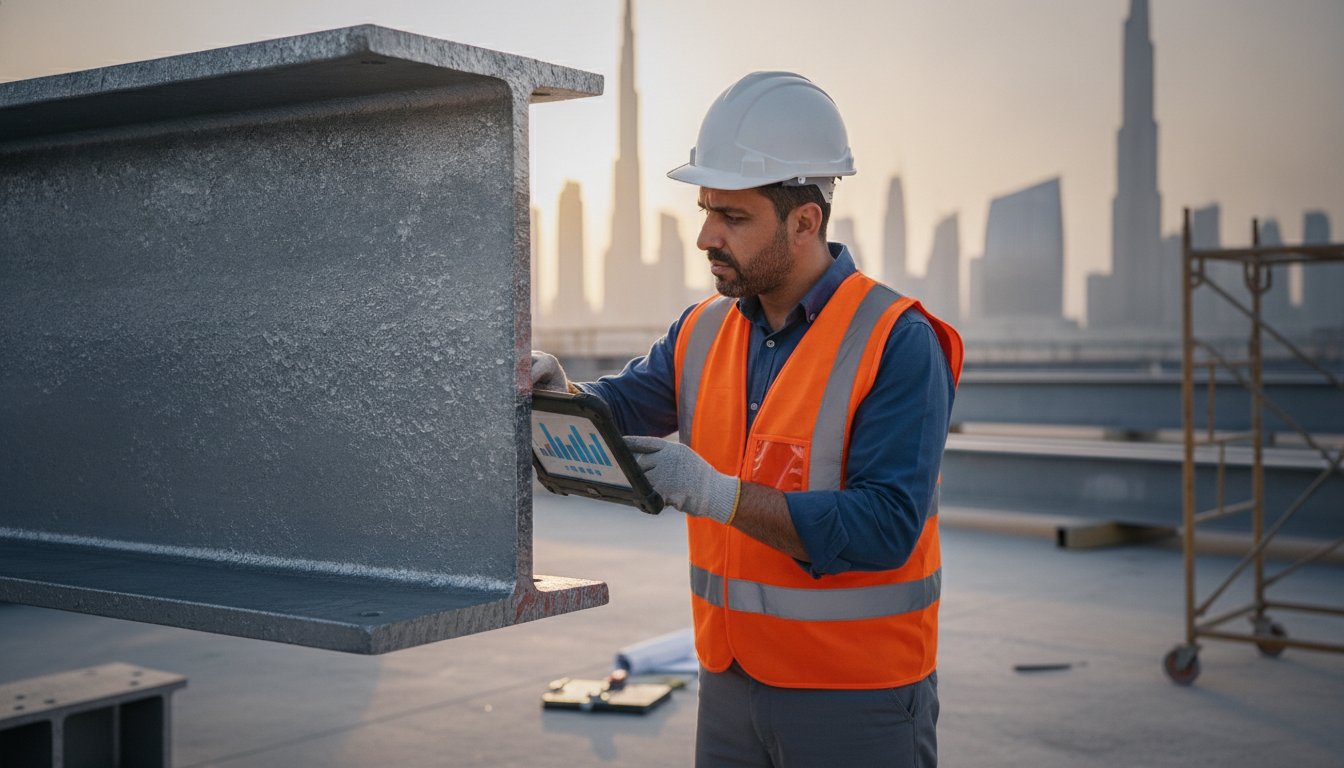
Rigorous inspection ensures that materials meet the required engineering specifications. Magnetic gauge testing is the most common non-destructive method for verifying coating thickness. Inspectors also perform adherence tests to ensure the zinc layer won't delaminate under mechanical stress. Visual inspections are equally vital to identify surface defects or "white rust." This powdery deposit occurs when zinc is exposed to moisture without adequate airflow, often during transit or improper storage. Partnering with a supplier that provides certified structural steel with comprehensive Mill Test Certificates (MTC) is the most reliable way to guarantee that your materials align with these international benchmarks.
Galvanized Steel vs. Stainless Steel: A Strategic Comparison
Choosing between galvanized steel and stainless steel is a decision that dictates both the initial capital expenditure and the total lifecycle cost of a project. The primary distinction lies in their chemistry. Stainless steel relies on chromium integrated throughout the alloy to form a passive oxide layer. In contrast, galvanized steel utilizes a carbon steel base protected by a sacrificial zinc coating. While stainless steel offers superior resistance to aggressive acids, galvanized steel remains the pragmatic choice for structural applications due to its high tensile strength and significantly lower price point per metric ton.
Structural integrity is another key differentiator. Carbon steel, the foundation of most galvanized products, often provides higher yield strengths than many common stainless grades. This makes it ideal for heavy-duty I-beams and angles used in UAE industrial frameworks. While stainless steel is nearly "maintenance-free" in certain environments, the sacrificial nature of zinc ensures that galvanized structures can withstand minor mechanical damage without immediate failure. For most large-scale civil engineering projects, the performance-to-cost ratio of zinc-coated steel is difficult to surpass.
Cost Analysis for Large-Scale Projects
Procurement strategies in the UAE must account for the substantial price gap between GI coils and stainless steel grades like 304 or 316. Stainless steel can often cost three to five times more than galvanized alternatives. This represents a massive impact on the budget when sourcing bulk materials for infrastructure. While market volatility affects all steel products, the relative stability of carbon steel prices allows for more predictable financial planning. Lifecycle cost assessments frequently show that galvanized steel provides a better return on investment (ROI) for projects with a 20 to 30 year design life, especially when initial AED outlays are a primary constraint.
Welding and Fabrication Considerations
Fabricating with galvanized steel requires specific technical protocols that differ from untreated carbon steel. Welding through a zinc coating produces hazardous metal fume fever if not managed correctly; therefore, high-volume extraction and proper respiratory protection are mandatory. Engineers often recommend grinding away the zinc coating around the weld zone to ensure a clean, high-strength bond. Once the weld is complete, the protection must be restored. Applying a zinc-rich cold galvanizing compound or thermal spraying ensures the joint maintains the same level of corrosion resistance as the rest of the component. This post-fabrication repair is essential for preventing localized oxidation in the harsh regional climate.
Industrial Applications and Environmental Durability
The versatility of galvanized steel makes it an essential material for the UAE's expanding infrastructure and industrial landscape. Road barriers, lighting poles, and bridge components across the federation rely on the impact resistance and corrosion protection of zinc coatings. Beyond public works, the material is a cornerstone of the renewable energy sector. Solar mounting structures must withstand high temperatures and abrasive desert winds while maintaining precise alignment for the entire 25 year lifecycle of the photovoltaic panels. The structural integrity of these arrays depends entirely on the durability of the underlying steel framework.
In the Oil & Gas and marine sectors, galvanized components protect offshore platforms and refinery piping from aggressive atmospheric conditions. The sacrificial zinc layer is particularly effective against the chloride-rich air found in the Arabian Gulf. It ensures that even if the surface is abraded during heavy industrial operations, the base metal remains protected from deep pitting or structural weakening.
Performance in High-Humidity Environments
Coastal industrial zones in the UAE present extreme challenges due to high salinity and humidity. These subtropical conditions can accelerate base metal oxidation if the coating is not correctly specified. While standard galvanizing offers robust protection, engineers often specify a duplex system for extreme environments. This involves applying a specialized paint or powder coating over the galvanized surface. This combination provides a synergistic effect; the paint protects the zinc from initial consumption, while the zinc prevents under-film corrosion if the paint is scratched. This dual layer strategy is a strategic choice for high value assets near the shoreline.
Galvanized Steel in Civil Construction
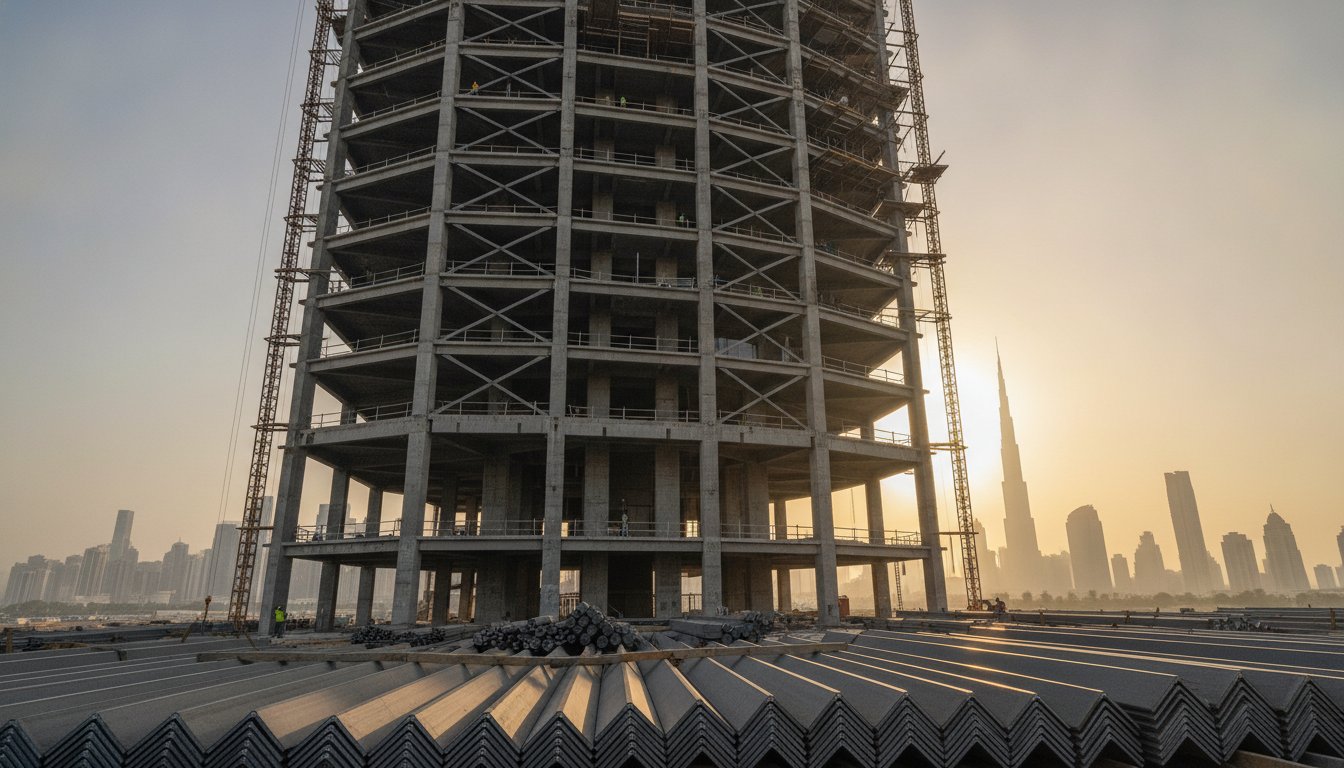
Civil engineering projects utilize galvanized steel in both visible and concealed applications. GI coils are the primary raw material for manufacturing industrial cladding, roofing panels, and HVAC ducting. These systems must resist internal condensation and external weathering without requiring frequent replacement. For the primary skeleton of industrial warehouses and commercial buildings, structural I-beams and H-beams provide the necessary load-bearing capacity. These sections are typically hot-dip galvanized to ensure the entire surface, including internal corners and hollow sections, receives a uniform protective layer. This level of coverage is nearly impossible to achieve with manual painting on complex structural shapes.
Securing high-quality materials is essential for long-term project viability and safety. If you're managing a large-scale development, you can source premium structural steel that meets these rigorous durability requirements across the GCC.
Strategic Sourcing: Optimizing Bulk Steel Procurement
Strategic procurement of galvanized steel requires more than just price comparison. It demands a rigorous evaluation of the global supply chain. Identifying Tier 1 mills across Europe, Asia, and the MENA region is the first step in ensuring material consistency. These high-tier producers operate with state-of-the-art galvanizing lines that guarantee the precise coating weights discussed in previous sections. Sourcing from reputable regions reduces the risk of receiving sub-standard material that fails prematurely in the high-salinity coastal zones of the UAE.
The Mill Test Certificate (MTC) is the most critical document in quality assurance. It serves as the definitive record of the steel's chemical composition and physical properties. For galvanized products, it must explicitly state the zinc coating mass, usually expressed in grams per square meter. Verification of these certificates ensures that the material matches the specific engineering requirements of the project. Without a verified MTC, there's no guarantee that the sacrificial protection will perform as intended over the structure's design life.
Managing lead times and bulk inventory is essential for industrial continuity. Large-scale infrastructure projects can't afford delays in material delivery. A strategic trading partner maintains significant stocks of GI coils and structural sections to buffer against global market volatility. This logistical stability allows contractors to lock in pricing in AED and maintain their construction schedules. Reliability in the supply chain is just as important as the metallurgical quality of the steel itself. Consolidated procurement works.
Verifying Quality with Saffron Steel
Saffron Steel provides a transparent path for verifying quality. When reading an MTC, focus on the heat number, mechanical testing results, and the specific galvanizing standard, such as ASTM A123. We ensure that every batch aligns with the project-specific technical datasheets provided by consultants. Sourcing through a strategic partner simplifies this verification process, as the initial vetting of global mills is already completed. This methodical approach minimizes the risk of non-compliance on the job site.
Partnering for National Infrastructure Success
Success in national infrastructure depends on precision delivery and custom sourcing capabilities. Wholesale distribution offers B2B clients the scale needed for massive civil works, from highway barriers to industrial warehouses. By consolidating procurement through a single authoritative source, firms can optimize their logistical expenditure and ensure technical compliance across all structural components. Consult with Saffron Steel for your wholesale GI coil requirements to secure the materials your next project demands.
Securing Structural Longevity for UAE Infrastructure
Successful industrial procurement in the UAE requires a balance of technical precision and logistical excellence. You've seen how the metallurgical bond in galvanized steel provides an essential defense against the region's aggressive atmospheric conditions. By prioritizing compliance with the latest ASTM and EN standards, you ensure that every structural component meets the rigorous safety requirements of national infrastructure. It's about securing assets for decades, not just the immediate construction phase.
Optimizing your supply chain involves more than just selecting a material; it's about choosing a strategic partner who understands the complexities of global sourcing and quality verification. We maintain a focus on precision and reliability, sourcing from premier mills across Europe, Asia, and the MENA region. This ensures your projects remain on schedule while meeting project-specific technical datasheets. Partner with Saffron Steel for Reliable Wholesale Galvanized Steel Supply to leverage our expertise in international standards and precision delivery. We're ready to support your industrial continuity with high-quality structural steel solutions.
Frequently Asked Questions
What is the difference between hot-dip and electro-galvanized steel?
Hot-dip galvanizing involves immersing steel in a molten zinc bath to create thick, chemically bonded alloy layers. It's the industrial standard for structural beams and pipes. Electro-galvanizing uses an electrolytic process to apply a thinner, aesthetically smoother coating. While electro-galvanized products offer high dimensional precision, they lack the robust sacrificial protection required for heavy-duty outdoor infrastructure in the GCC. Hot-dip remains the primary choice for maximum corrosion resistance.
How long does galvanized steel last in coastal environments?
In coastal zones with high salinity, the lifespan of galvanized steel depends on the coating thickness and environmental severity. Standard hot-dip coatings often last between 20 to 30 years in these aggressive atmospheres before requiring significant maintenance. Using a duplex system, which combines galvanizing with a specialized paint layer, can extend this service life further. This strategy is common for high-value marine and oil and gas assets.
What is the significance of the Z275 coating designation for GI coils?
The Z275 designation indicates a minimum zinc coating mass of 275 grams per square meter, measured across both sides of the sheet. This is a common specification for GI coils used in UAE industrial cladding and roofing panels. It provides a reliable balance between initial material cost and long-term durability. Higher designations exist for extreme environments, but Z275 serves as the baseline for standard commercial and industrial applications across the region.
Can you paint over galvanized steel?
Yes, painting over galvanized steel is possible and often recommended as part of a duplex system. It's essential to properly prepare the surface to ensure adhesion. This involves removing any white rust or oil and using a specialized primer designed for non-ferrous metals. Applying a topcoat provides an additional barrier that protects the zinc layer from initial consumption, significantly increasing the total lifecycle of the structural component in humid climates.
How does galvanized steel compare to hot-rolled steel in terms of corrosion?
Hot-rolled steel is untreated and will begin to oxidize immediately when exposed to moisture and oxygen. Galvanized steel incorporates a sacrificial zinc layer that prevents the base metal from corroding. While hot-rolled steel is often cheaper initially, the cost of frequent repainting and structural repairs makes it more expensive over time. Zinc coatings eliminate the need for immediate surface treatment after delivery to the construction site, saving on labor costs.
What are the main international standards for galvanized steel quality?
The primary standards for quality assurance include ASTM A123/A123M-24 for structural products and ISO 1461:2022 for fabricated iron and steel articles. These specify minimum coating thicknesses and testing protocols. For GI coils, JIS G3302 is a common Japanese standard used by many Asian mills. Adhering to these globally recognized benchmarks ensures that the material performs predictably under the mechanical and environmental stresses of large-scale infrastructure projects in the UAE.
Why is a Mill Test Certificate (MTC) essential for bulk steel orders?
An MTC provides verified evidence that the steel meets the specific chemical and mechanical properties required by your engineering team. It includes critical data such as the heat number, yield strength, and specific zinc coating weight. For bulk procurement in the UAE, an MTC is the only way to guarantee that the materials comply with project specifications. It's a mandatory document for quality audits and structural safety certifications during the inspection phase.
Is galvanized steel magnetic?
Galvanized steel remains magnetic because the zinc coating is applied to a carbon steel base. Zinc itself is non-magnetic; however, the thin protective layer doesn't interfere with the underlying steel's magnetic properties. This allows the material to be used in applications where magnetic attachment or sensing is required. It's a common misconception that the coating shields magnetism. The process doesn't alter the fundamental ferrous nature of the I-beams or coils used in construction.
Frequently Asked Questions
Hot-dip galvanizing involves immersing steel in 450°C molten zinc, creating thick alloy layers ideal for heavy UAE infrastructure. Electro-galvanizing uses an electrolytic bath to apply a much thinner, precise coating for smaller aesthetic components. While electro-galvanized products offer superior surface smoothness, they don't have the sacrificial volume required for long-term durability in the high-humidity and corrosive environments common in the GCC region.
In high-salinity UAE coastal zones, galvanized steel typically provides a service life of 20 to 30 years before requiring significant maintenance. This lifespan can extend beyond 50 years in inland, arid environments where atmospheric humidity is minimal. The exact duration depends on the specific zinc consumption rate, which is accelerated by salt-laden air and the extreme thermal cycles common in the Arabian Peninsula.
The Z275 designation specifies a minimum zinc coating mass of 275 g/m² across both sides of the GI coil. It's the standard benchmark for industrial projects in the UAE because it provides optimal sacrificial protection for HVAC ducting and roofing. Choosing Z275 ensures the substrate remains protected against oxidation even in environments with moderate moisture levels, making it a cost-effective choice for long-term structural integrity.
You can paint over it, a process known as a duplex system that significantly enhances environmental durability. This requires specialized surface preparation, such as sweep blasting or the application of a T-wash primer, to ensure the paint adheres to the zinc layer. Using a duplex system can more than double the expected lifespan of the steel in aggressive marine or industrial zones where salinity levels are high.
Galvanized steel is far superior to hot-rolled steel because it includes a metallurgical zinc barrier that prevents oxidation. Hot-rolled steel lacks any inherent protection and will begin to rust immediately when exposed to the UAE's humidity. The sacrificial nature of the zinc coating means it'll continue to protect the base metal even if the surface suffers minor mechanical damage during transport or installation.
Primary international standards include ASTM A653 for coils, ASTM A123 for structural shapes, and EN ISO 1461 for hot-dip coatings. These frameworks establish the minimum requirements for coating weight, adherence, and finish quality. Compliance with the 2026 updates to these standards is essential for procurement teams to ensure material consistency and meet the rigorous engineering specifications required for complex national infrastructure projects.
A Mill Test Certificate is vital because it provides documented proof of the steel's chemical composition, tensile strength, and coating mass. It ensures that the bulk order aligns with the project's technical specifications and verifies the material's origin from a Tier 1 mill. For large-scale B2B procurement, the MTC is the primary tool for risk mitigation and quality assurance during the rigorous inspection process.
Galvanized steel remains magnetic because the underlying substrate is typically carbon steel or iron, both of which are ferromagnetic materials. While the zinc coating itself is non-magnetic, it's applied in a layer thin enough that it doesn't obstruct the magnetic pull of the base metal. This property is useful for various industrial applications where magnetic attachment or automated sorting is required during the fabrication process.