The Professional Guide to Steel Angle Supply in the UAE: Standards, Applications, and Procurement
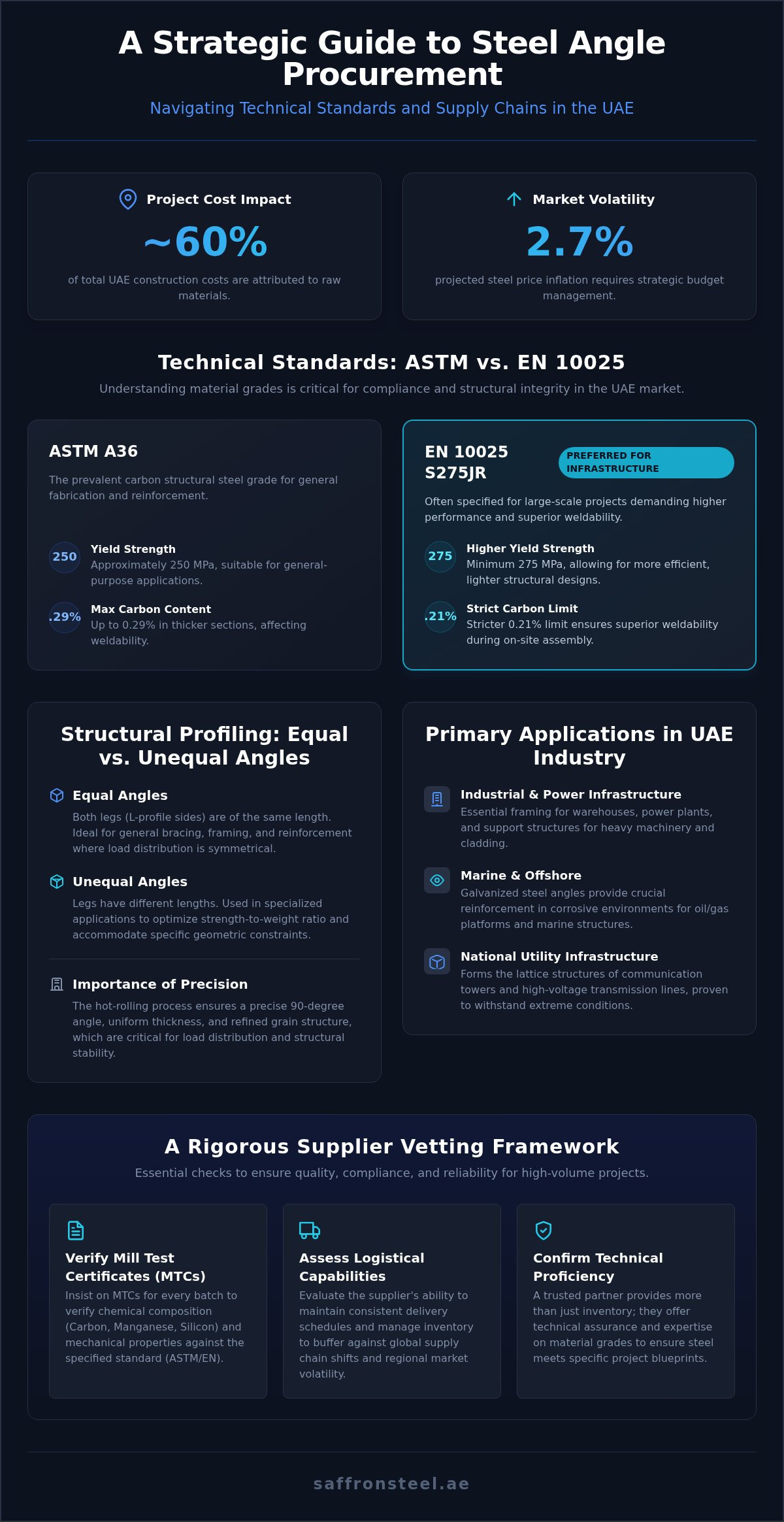
With raw materials accounting for approximately 60% of total construction costs in the UAE, a single procurement oversight in your structural steel supply can jeopardize the financial integrity of a major project. You're likely already managing the pressure of fluctuating market rates and the constant need to verify mill test certificates against rigorous international standards. Identifying a technically proficient steel angle supplier UAE professionals can trust isn't just a logistical task; it's a strategic necessity for operational stability.
This guide will equip you with the expertise to master ASTM and EN 10025 specifications while establishing a rigorous framework for evaluating wholesale partners. You'll gain a clear understanding of how to navigate the 2.7% projected steel price inflation and ensure your delivery schedules remain resilient against global supply chain shifts. We'll break down the essential procurement requirements for equal and unequal angles to ensure your next industrial project remains on schedule, compliant, and within budget.
Key Takeaways
- Master the distinction between ASTM A36 and EN 10025 material grades to ensure full compliance with UAE industrial and construction regulations.
- Evaluate the structural advantages of equal versus unequal angles to optimize load-bearing performance in large-scale infrastructure projects.
- Establish a rigorous framework for vetting a steel angle supplier UAE procurement teams can trust for high-volume, long-term project requirements.
- Learn how to utilize Mill Test Certificates to verify material authenticity and mitigate the risks associated with bulk structural steel sourcing.
- Understand the logistical strategies necessary to maintain consistent delivery schedules and manage budget volatility in the regional steel market.
The Fundamental Role of Steel Angles in National Infrastructure
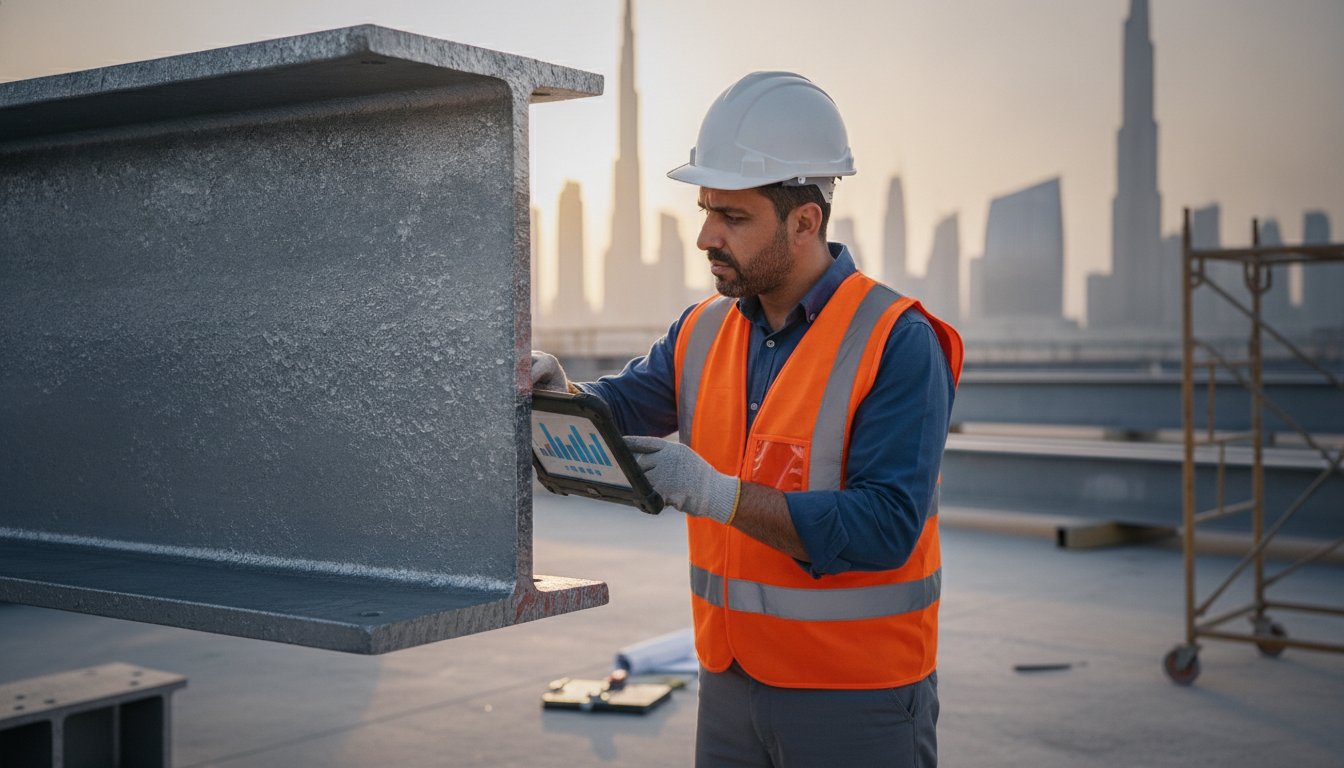
Steel angles represent a cornerstone of modern engineering, defined as hot-rolled structural steel with an L-shaped cross-section. These components are manufactured by passing steel through a series of rollers at high temperatures to achieve a precise 90-degree profile. Because of their versatility, they serve as the primary reinforcement and framing material across the United Arab Emirates' most ambitious developments. When sourcing from a steel angle supplier UAE project managers must distinguish between commercial-grade angles, used for light fabrication and brackets, and high-strength structural angles designed for heavy load-bearing capacities. These products are manufactured according to established Structural steel standards, ensuring they possess the predictable mechanical properties required for safety-critical installations.
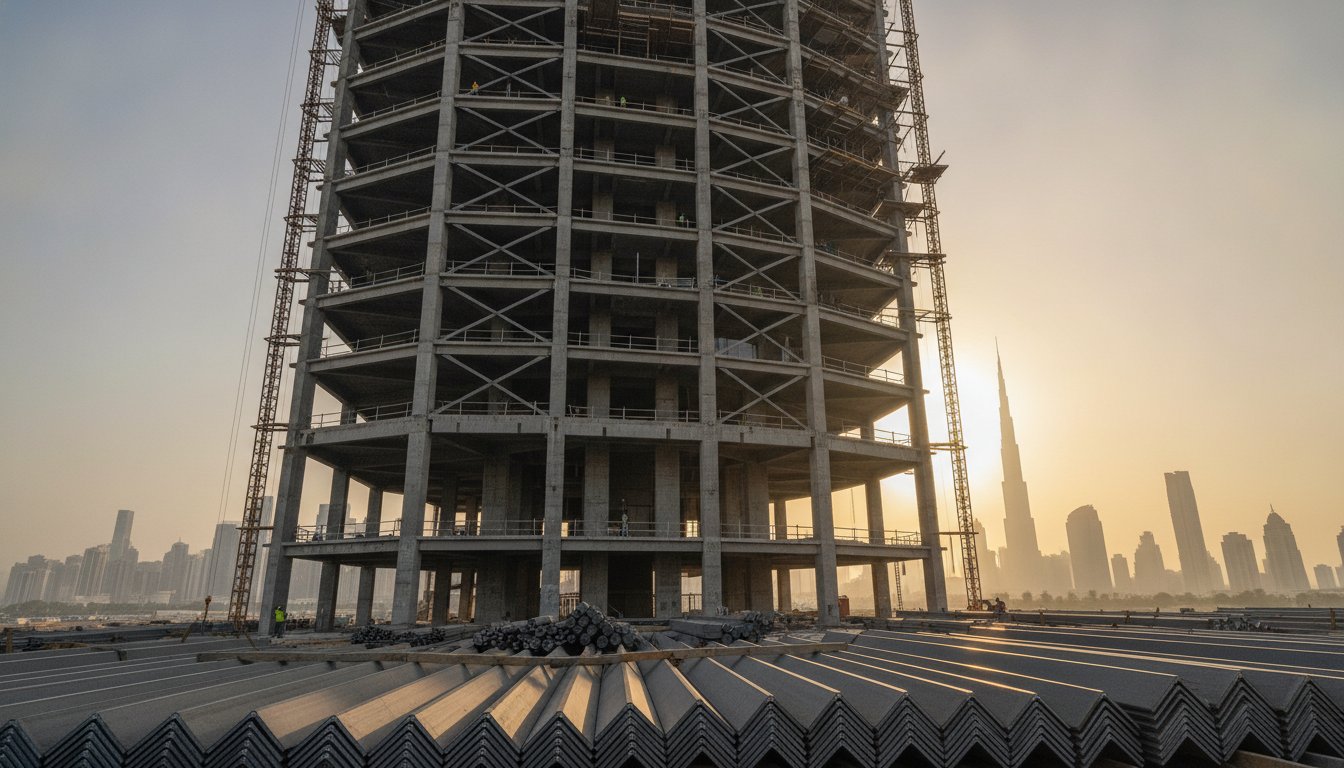
Within the UAE's industrial landscape, steel angles aren't merely accessories; they're the backbone of diverse frameworks. From the chassis of heavy-duty transport trailers to the intricate bracing of high-rise supports throughout the nation's diverse developments, their presence is ubiquitous. Integrating these components into a broader long-steel procurement strategy requires a deep understanding of how they interact with other structural elements like I-beams and channels. A seasoned steel angle supplier UAE provides more than inventory; they offer the technical assurance that every ton of steel meets the specific tensile and yield requirements of the project's engineering blueprints.
Primary Applications in UAE Industry
The utility of steel angles extends across several high-stakes sectors. In the construction of industrial warehouses and power plants, they provide the essential framing that supports cladding and internal machinery. The UAE's marine and offshore oil and gas sectors rely on galvanized steel angles for reinforcement in corrosive environments, where material longevity is paramount. Additionally, these profiles are critical for national utility infrastructure. They form the lattice structures of communication towers and high-voltage transmission lines that span the Emirates, proving their reliability in extreme thermal conditions and high wind loads.
The Importance of Precision in Structural Shapes
Engineering success in complex assemblies depends on the 90-degree accuracy of the angle's legs. Even a minor deviation can compromise load distribution, leading to structural instability or assembly delays during on-site welding and bolting. The hot-rolling process is vital here, as it refines the grain structure of the steel to achieve superior structural integrity and uniform thickness. The L-profile is an engineered shape consisting of two legs that meet at a perpendicular point to provide high resistance to bending. This geometry allows the component to support significant weight without adding excessive mass to the overall structure, making it an efficient choice for large-scale industrial frameworks.
Technical Standards and Material Grades for the UAE Market
Technical compliance serves as the foundation of structural safety in the Emirates. Procurement teams must navigate a dual-standard environment where American ASTM and European EN specifications coexist. While ASTM A36 remains the most prevalent carbon structural steel grade for general fabrication, the increasing complexity of national infrastructure often demands the higher yield strengths found in EN 10025 grades like S275JR or S355JR. A proficient steel angle supplier UAE must provide comprehensive documentation detailing the chemical composition of these materials. Elements like Carbon, Manganese, and Silicon are not just numbers on a page; they dictate the material's weldability, toughness, and ultimate tensile strength. Carbon provides the necessary hardness, while Manganese enhances the steel's ability to withstand impact loads in high-traffic industrial zones.
ASTM A36 vs. EN S275JR: A Comparative Analysis
The choice between these standards often depends on the specific engineering requirements of the project. ASTM A36 offers a reliable yield strength of approximately 250 MPa, making it suitable for general-purpose reinforcement and framing. In contrast, EN S275JR provides a higher yield point of 275 MPa, which often allows for more efficient material usage in load-bearing structures. While ASTM A36 has a maximum carbon content that can reach 0.29 percent for thicker sections, EN S275JR maintains a stricter limit of 0.21 percent to ensure superior weldability during site assembly. This technical distinction is why European standards are frequently preferred for large-scale infrastructure projects that follow Eurocode design principles.
Ensuring Compliance with International Quality Marks
Maintaining project integrity requires adherence to UAE standards and technical regulations as overseen by the Ministry of Industry and Advanced Technology. Third-party inspections play a critical role in verifying that the steel's mechanical properties match the claims on the Mill Test Certificate. Beyond material grade, standard tolerances for thickness, width, and length must be strictly managed to prevent misalignments in complex structural assemblies. For high-rise and bridge construction, mill-certified steel provided by a reputable steel angle supplier UAE is non-negotiable to mitigate the risk of structural failure. When sourcing these materials, it's essential to partner with a distributor that prioritizes technical accuracy. You can consult with Saffron Steel to review full technical specifications for your specific grade requirements.
Structural Profiling: Equal vs. Unequal Steel Angles
The geometric configuration of a structural profile dictates its utility within a project's load-bearing hierarchy. Equal angles are defined by legs of identical length, typically forming a 90-degree L-shape that provides balanced structural reinforcement. These are the primary choice for standard bracing, brackets, and framing where the load is distributed evenly across both axes. Unequal angles, conversely, feature legs of differing lengths, such as 150mm by 90mm. This asymmetry allows engineers to address specific structural challenges where a standard equal profile would be either insufficient or physically too large for the available space. For any steel angle supplier UAE procurement managers engage, the ability to provide both standard and specialized profiles is a key performance indicator.
The UAE market typically maintains inventory for equal angles ranging from 20mm by 20mm up to 250mm by 250mm. Unequal angles are commonly available in sizes from 75mm by 50mm up to 200mm by 100mm. Selecting the correct profile involves more than just geometric fit; it requires precise weight calculations to manage total project tonnage. Every kilogram of steel impacts your logistics costs and crane capacity requirements on-site. Precision in these calculations ensures that the structural integrity is maintained without inflating the budget through unnecessary material volume.
When to Specify Unequal Angles
Unequal angles are often mandated in scenarios where space is at a premium or where the structural load is inherently asymmetric. They are frequently specified for lintels in construction. The longer leg provides the necessary vertical support for masonry while the shorter leg accommodates the depth of the building envelope. In mechanical equipment framing, these profiles offer superior resistance to lateral forces in specific orientations. This allows engineers to optimize the weight-to-strength ratio of the assembly. Sourcing these specialized unequal profiles can be challenging in the regional market, as they often require specific mill runs rather than off-the-shelf availability.
Standard Sizes and Custom Sourcing
Accurate weight data is essential for coordinating delivery schedules and managing the 5% VAT applied to the CIF value of imported materials. Below is a comparison of common equal angle sizes and their respective weights:
| Equal Angle Size (mm) | Thickness (mm) | Approx. Weight (kg/m) |
|---|---|---|
| 25 x 25 | 3 | 1.12 |
| 50 x 50 | 5 | 3.77 |
| 100 x 100 | 10 | 15.00 |
| 200 x 200 | 20 | 59.90 |
While standard dimensions serve most requirements, specialized industrial projects often demand non-standard sizes. Saffron Steel utilizes its global mill network across Europe, Asia, and the MENA region to facilitate custom sourcing for these complex structural requirements. This strategic reach ensures that even the most specialized engineering specifications are met with technical accuracy and logistical reliability. As a dedicated steel angle supplier UAE projects can rely on, we bridge the gap between global production capabilities and local infrastructure needs.
Critical Factors in Wholesale Steel Angle Procurement
Wholesale procurement for national infrastructure requires a transition from simple purchasing to strategic asset management. A reliable steel angle supplier UAE organizations partner with must demonstrate more than just a large inventory; they must provide a transparent audit trail for every metric ton delivered to the site. This process begins with the rigorous verification of Mill Test Certificates (MTC), which serve as the definitive record of a material's pedigree. In an environment where construction costs are heavily influenced by material precision, any discrepancy in quality documentation can lead to expensive project delays or regulatory non-compliance. Evaluating a supplier's capacity to sustain bulk supply over multi-year project lifecycles is equally vital to ensure that phase two of a development receives the same high-standard material as phase one.
Verifying Mill Test Certificates (MTC)
An MTC is a mandatory document that provides the chemical and physical profile of the steel. Procurement teams must scrutinize the "Heat Number" on the certificate, which is a unique identifier linked to a specific batch of steel from the melting furnace. This number must match the stamping or labeling on the physical steel angles delivered to the site to ensure full traceability. The meticulous verification of MTC data ensures that load-bearing components possess the exact yield and tensile strengths specified by engineers, effectively preventing catastrophic structural failure in large-scale builds. Beyond the grade verification, the test results for elongation and impact toughness provide the technical assurance that the steel will perform under the UAE's specific environmental stressors.
Logistics and National Distribution Efficiency
Managing lead times from international mills in Europe or Asia to national delivery points requires sophisticated coordination. Professional logistics operations reduce on-site inventory costs by synchronizing steel arrivals with specific construction milestones, preventing the clutter and safety hazards of overstocking. Risk mitigation strategies are essential for navigating international shipping lanes and regional customs clearance, especially given the current 10% import duty on certain long steel products. A strategic partner manages these complexities to maintain a steady flow of material, regardless of global market volatility.
Storage and handling protocols are the final link in the quality chain. Steel angles must be stored in a manner that prevents surface oxidation, which can compromise the bonding of coatings or paints applied later. Maintaining structural straightness is also critical; improper stacking can lead to permanent deformation, rendering the profiles useless for precision framing. For organizations seeking to secure their supply chain, you can request a wholesale procurement consultation to align your project requirements with our global sourcing capabilities. Our focus remains on delivering technical accuracy and logistical reliability to every industrial site across the Emirates.
Saffron Steel: Precision Distribution and Industrial Supply Chain Solutions
Saffron Steel LLC serves as a professional facilitator, bridging the critical gap between global production hubs and the specific demands of national infrastructure projects. As a premier steel angle supplier UAE procurement professionals rely on, we maintain a disciplined focus on transparency and technical accuracy in every wholesale transaction. Our sourcing network spans Europe, Asia, and the MENA region. This allows us to secure high-quality structural steel that meets the rigorous demands of the regional construction market. We don't just deliver material; we provide the logistical assurance required for large-scale industrial projects to proceed without interruption. Our commitment to technical accuracy means every shipment is accompanied by the necessary certification to prove compliance with ASTM or EN standards. This transparency builds long-term trust and ensures that the structural integrity of your build is never in question.
The Saffron Steel Advantage in Structural Long Steel
Our expertise extends beyond simple distribution to the management of complex, multi-category orders. Whether your project requires steel angles, H-beams, or deformed rebar, we coordinate the sourcing and delivery with meticulous oversight. This disciplined approach ensures that every component complies with international quality marks and project-specific engineering requirements. In light of the UAE government's announcement of AED 180 billion in new industrial procurement opportunities, the need for a seasoned partner has never been more critical. We act as a steady guide through the complexities of global supply chains, supporting the UAE's industrial growth and ensuring operational integrity for our partners. Every transaction is handled with the precision required to support the nation's 2030 industrial localization goals and the Dubai 2040 Urban Master Plan.
Partnering for Long-Term Project Success
Success in high-stakes sectors like offshore oil and gas or marine engineering depends on a stable supply partner. We develop tailored procurement strategies that address the specific corrosion resistance and load-bearing requirements of these environments. In a market where steel prices are forecasted to climb by approximately 2.7% in 2026, our role as a strategic steel angle supplier UAE becomes essential for maintaining project viability. We bring order to the procurement process by providing clear lead times and reliable delivery schedules. This level of professional management mitigates the risks associated with bulk long steel delivery and helps maintain project budgets during fluctuating market cycles. Our team prioritizes performance and proven expertise to act as a dependable strategic partner for your most demanding builds. Contact Saffron Steel for a professional consultation on your structural steel requirements.
Optimizing Your Structural Steel Supply Chain
Successful industrial procurement in the Emirates requires a deep commitment to technical standards and logistical discipline. You've seen how the distinction between ASTM and EN grades impacts structural integrity and why verified traceability through Mill Test Certificates remains non-negotiable for national infrastructure. As the UAE construction market is estimated to reach a value of AED 466.57 billion in 2026, the demand for precision in long steel components will only intensify. Maintaining project stability in this environment requires moving beyond simple vendor relationships toward strategic partnerships.
Navigating this high-stakes market requires a partner that bridges global mill production with regional project milestones. Saffron Steel operates as a seasoned steel angle supplier UAE project managers trust to provide order and transparency. Our global network across Europe and Asia ensures access to compliant materials; our focus on meticulous oversight guarantees that your bulk deliveries remain on schedule and within your strategic budget. We're dedicated to acting as a steady guide through the complexities of the regional supply chain.
Secure Your Structural Steel Supply Chain with Saffron Steel to ensure your next project benefits from strict adherence to ASTM and EN quality standards. We're ready to support your industrial growth with reliable national distribution and expert technical guidance for even the most complex structural requirements.
Frequently Asked Questions
What is the most common steel grade for angles in the UAE?
ASTM A36 is the most prevalent carbon structural steel grade for general fabrication and reinforcement in the region. Many large-scale infrastructure projects also specify EN 10025 S275JR due to its higher yield strength and superior weldability. As a strategic steel angle supplier UAE professionals rely on, we ensure these grades are available to meet both American and European engineering specifications commonly used in the Emirates.
What is the difference between equal and unequal steel angles?
The primary distinction lies in the symmetry of the legs. Equal angles possess legs of identical length; they provide balanced reinforcement for standard bracing, brackets, and framing. Unequal angles feature legs of different lengths, which allows engineers to address asymmetric load-bearing requirements or space constraints in specialized mechanical equipment and lintel applications where a standard profile isn't sufficient.
How do I read a Mill Test Certificate (MTC) for steel angles?
Focus on the heat number first to ensure it matches the physical markings on the steel batch delivered to your site. You must then verify the material grade and chemical composition, specifically carbon and manganese levels, to ensure they align with your project's technical specifications. Finally, review the mechanical test results for yield strength, tensile strength, and elongation to confirm full compliance with international standards.
Can steel angles be used in marine environments?
Steel angles are frequently utilized in marine and offshore oil and gas structures provided they undergo proper surface treatment. Hot-dip galvanization is the standard requirement to prevent corrosion in the UAE's high-salinity coastal environments. Saffron Steel supplies galvanized steel angles that maintain structural integrity against the harsh environmental stressors found in regional maritime and utility infrastructure.
What are the standard lengths for wholesale steel angle supply?
Wholesale structural steel angles are typically supplied in standard lengths of 6 meters and 12 meters. These dimensions are optimized for international shipping and regional transport logistics across the Emirates. Procurement teams should coordinate with their steel angle supplier UAE to confirm availability if specific lengths are required to minimize on-site cutting and material waste during the assembly phase.
Does Saffron Steel provide custom-sized steel angles for large projects?
We facilitate the custom sourcing of non-standard dimensions through our extensive global mill network across Europe, Asia, and the MENA region. While we maintain a robust inventory of standard profiles, our expertise lies in coordinating specialized production runs for large-scale projects with unique structural requirements. This strategic reach ensures your engineering specifications are met without compromising on technical accuracy or delivery timelines.
What is the difference between ASTM A36 and EN 10025 standards?
ASTM A36 is an American standard for carbon structural steel with a yield strength of approximately 250 MPa. EN 10025 is the European standard, with grades like S275JR offering a higher yield point of 275 MPa. The choice often depends on whether the project follows American or Eurocode design principles, as each standard has distinct requirements for chemical composition and weldability during site assembly.
How does hot-rolling affect the performance of steel angles?
Hot-rolling involves processing the steel at temperatures above its recrystallization point to achieve a uniform grain structure throughout the profile. This process results in superior structural integrity and high resistance to bending, which is essential for heavy load-bearing applications. The hot-rolling technique ensures that the final L-profile possesses the consistent mechanical properties required for safety-critical framing in high-rise and industrial builds.
Frequently Asked Questions
ASTM A36 is the most prevalent carbon structural steel grade for general fabrication and reinforcement in the region. Many large-scale infrastructure projects also specify EN 10025 S275JR due to its higher yield strength and superior weldability. As a strategic steel angle supplier UAE professionals rely on, we ensure these grades are available to meet both American and European engineering specifications commonly used in the Emirates.
The primary distinction lies in the symmetry of the legs. Equal angles possess legs of identical length; they provide balanced reinforcement for standard bracing, brackets, and framing. Unequal angles feature legs of different lengths, which allows engineers to address asymmetric load-bearing requirements or space constraints in specialized mechanical equipment and lintel applications where a standard profile isn't sufficient.
Focus on the heat number first to ensure it matches the physical markings on the steel batch delivered to your site. You must then verify the material grade and chemical composition, specifically carbon and manganese levels, to ensure they align with your project's technical specifications. Finally, review the mechanical test results for yield strength, tensile strength, and elongation to confirm full compliance with international standards.
Steel angles are frequently utilized in marine and offshore oil and gas structures provided they undergo proper surface treatment. Hot-dip galvanization is the standard requirement to prevent corrosion in the UAE's high-salinity coastal environments. Saffron Steel supplies galvanized steel angles that maintain structural integrity against the harsh environmental stressors found in regional maritime and utility infrastructure.
Wholesale structural steel angles are typically supplied in standard lengths of 6 meters and 12 meters. These dimensions are optimized for international shipping and regional transport logistics across the Emirates. Procurement teams should coordinate with their steel angle supplier UAE to confirm availability if specific lengths are required to minimize on-site cutting and material waste during the assembly phase.
We facilitate the custom sourcing of non-standard dimensions through our extensive global mill network across Europe, Asia, and the MENA region. While we maintain a robust inventory of standard profiles, our expertise lies in coordinating specialized production runs for large-scale projects with unique structural requirements. This strategic reach ensures your engineering specifications are met without compromising on technical accuracy or delivery timelines.
ASTM A36 is an American standard for carbon structural steel with a yield strength of approximately 250 MPa. EN 10025 is the European standard, with grades like S275JR offering a higher yield point of 275 MPa. The choice often depends on whether the project follows American or Eurocode design principles, as each standard has distinct requirements for chemical composition and weldability during site assembly.
Hot-rolling involves processing the steel at temperatures above its recrystallization point to achieve a uniform grain structure throughout the profile. This process results in superior structural integrity and high resistance to bending, which is essential for heavy load-bearing applications. The hot-rolling technique ensures that the final L-profile possesses the consistent mechanical properties required for safety-critical framing in high-rise and industrial builds.